
1. Two Major Pain Points in Lithium Battery Production: Low Recovery & Heavy Environmental Pressure
For players in lithium battery new material manufacturing, two core challenges are universal. In lithium extraction or cathode material production, valuable materials often fail to reach high recovery rates. Fine mud and ultrafine powder wash away with wastewater, causing unnecessary cost losses. Meanwhile, production wastewater carries complex components and heavy metal salts. It brings tough treatment challenges and high sludge disposal costs, with risks of emission violations. As an efficient additive tailored for the full lithium battery industrial chain, special polyacrylamide (PAM) works across leaching purification, material recovery, wastewater treatment and sludge dewatering. It helps plants raise recovery rates, cut operating costs and maintain stable compliance.
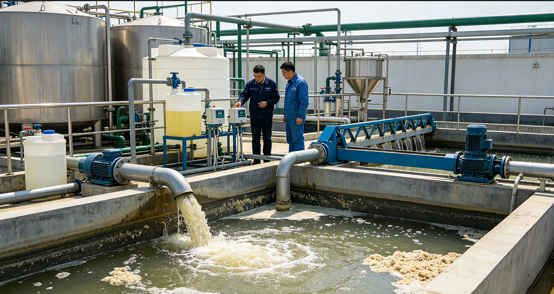
2. Flocculation & Clarification in Lithium Ore Leaching to Raise Lithium Liquid Recovery
Take lepidolite, spodumene acid/alkali leaching or brine treatment for salt lake lithium extraction for example. Ore pulp or brine contains massive fine mud and insoluble impurities. Natural sedimentation proceeds slowly. This slows production and triggers lithium liquid entrainment losses. Once you add special PAM, its polymer chains quickly adsorb and wrap fine mud and impurity particles. These particles clump into dense flocs and settle fast for clear solid-liquid separation. This shortens settling time greatly and expands clarifier capacity. It also reduces lithium liquid trapped in sludge and lifts lithium resource recovery. In short, you reclaim usable product from waste streams.
3. Cathode Material Washing & Separation to Cut Powder Loss
During water washing and purification of LFP, NCM and other cathode materials, large volumes of ultrafine powder escape with washing water. This wastes costly raw materials and increases follow-up wastewater treatment burdens. With proper PAM dosing, ultrafine cathode powder in water flocculates rapidly and settles for separation. Recovered material can re-enter production lines to directly lower raw material waste. On top of that, clarified wash water can circulate for reuse. It cuts fresh water intake and further reduces water expenses.
4. Efficient Treatment of Production Wastewater for Stable Discharge Compliance
Lithium battery wastewater contains residual lithium, cobalt, nickel, high salinity and suspended solids. Direct treatment creates heavy loads and unstable outlet water quality. At the pre-treatment stage, PAM works together with neutralizers and heavy metal capture agents. It quickly flocculates precipitated heavy metals and suspended solids. It removes most insoluble contaminants and eases pressure on subsequent biochemical and membrane systems. Treated effluent maintains stable quality and meets discharge standards reliably. Good-quality treated water can even serve auxiliary production processes.
5. Deep Sludge Dewatering to Reduce Hazardous Waste Disposal Expenses
Sludge from lithium battery wastewater treatment holds heavy metals and falls under hazardous waste. Tonnage-based disposal fees represent a major cost for many manufacturers. Cationic PAM conditions sludge before filter presses or screw presses. It cuts sludge moisture content to a low level. Filtered cake stays firm and free of dripping water, with much smaller volume. Sludge volume for disposal can drop by more than half. In the long run, savings on hazardous waste disposal far outweigh chemical costs, making this a key hidden cost-reduction measure.
6. Fits Full Process Scenarios; Gentle Performance Preserves Product Quality
This custom PAM serves the whole lithium battery value chain. It works reliably for lithium ore beneficiation, salt lake lithium extraction, cathode material manufacturing and lithium battery recycling. It reacts mildly and introduces no extra impurities. It keeps lithium liquid and material purity intact and avoids adverse reactions with other process chemicals. Besides, it connects directly to existing leaching tanks, settling tanks and filter equipment. No production line reconstruction is required for quick rollout, matching production plants of all sizes.
7. Balance Quality Upgrade & Cost Reduction for Better Long-term Returns
Fierce competition grips the new energy sector. Manufacturers must balance material quality control, production cost management and stricter environmental rules. Special PAM for lithium battery new materials delivers benefits at both production and environmental ends. On the production side, it lifts resource recovery, cuts material loss and improves process efficiency. On the environmental side, it guarantees stable wastewater discharge and drastically lowers sludge disposal costs. One chemical input covers both production and environmental links. It features low dosage and fast results, serving as a cost-effective option for lithium battery material plants to optimize processes and boost profits.