
1. Two Major Pain Points of Coking Wastewater: High Risk of Non-compliance & Heavy Disposal Costs
Operators at coking and coal chemical plants all know this challenge. Phenol-cyanide wastewater and coal gasification black water are tough to treat. This water carries coal tar, fine coke powder and coal dust. It holds high-level, complex and toxic pollutants. Common flocculants cannot deliver thorough treatment, so effluent easily fails discharge standards. Worse still, oily sludge after biochemical treatment is sticky and hard to dewater. It counts as hazardous waste, and disposal is charged by the ton. Annual sludge treatment creates massive expenses. During shutdown and maintenance, fluctuating water flow may crash the whole treatment system. Custom polyacrylamide (PAM) for coal coking and coal chemical sectors targets such complex wastewater. It solves treatment challenges across the full workflow, from front-end pre-treatment to back-end sludge dewatering.
2. Front-end Pre-treatment Flocculation to Greatly Cut Biochemical Load
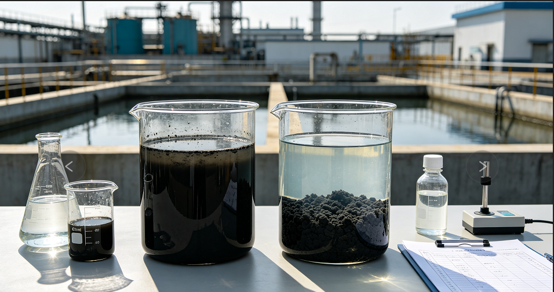
Before phenol-cyanide wastewater and coal gasification black water flow into biochemical tanks, add custom PAM for pre-treatment. It delivers remarkable results. Its high-molecular chains quickly adsorb and wrap coal tar particles, suspended coke powder, coal dust and colloidal impurities. These contaminants cluster into dense large flocs and settle fast. This step removes most insoluble pollutants and partial oil content directly. As a result, organic loads entering biochemical tanks drop sharply. Microbes resist shocks from fluctuating water quality, and effluent stays stable. Meanwhile, it cuts aeration energy consumption and downstream chemical dosage. In short, it acts as a buffer for subsequent treatment units. The system handles hydraulic shocks much better.
3. Advanced Dewatering of Oily Sludge to Slash Heavy Disposal Expenses
Most surplus sludge from coal chemical and coking processes contains oil and features high viscosity. Conventional dewatering equipment struggles to dry it, keeping disposal costs high. Cationic PAM conditions sludge by gathering scattered sludge particles. It fully releases free water and interstitial water trapped inside sludge. When paired with plate-and-frame filter presses or screw dewaterers, it produces firm low-moisture sludge cakes. The cakes stay non-sticky and leak-free, with greatly reduced volume. Less sludge means far lower hazardous waste disposal fees. In long-term operation, savings outweigh chemical costs by a large margin.
4. Side-stream Filtration & Purification for Circulating Water to Mitigate Scaling & Equipment Wear
Beyond wastewater treatment, PAM also works in side-stream filtration of circulating cooling water. Over long runs, circulating water at coal chemical and coking sites accumulates fine coal dust, coke powder and oil residues. These contaminants scale and clog pipelines and heat exchangers. Heat transfer efficiency drops, while energy use and cleaning frequency rise. Adding a small dose of PAM to side-stream filters flocculates fine impurities rapidly and improves filtration performance. Clean circulating water reduces scaling and corrosion, extends equipment service life and cuts maintenance costs.
5. Strong Tolerance to Heat & Complex Impurities for Demanding Working Conditions
Coking and coal chemical wastewater features high temperature, high oil content and complicated water quality. Ordinary chemicals lose efficacy easily. Our custom PAM grades offer excellent heat, oil and salt resistance. They maintain stable flocculation performance under high-temperature, oil-rich and heavily polluted conditions. The product fits traditional coking plants, semi-coke plants, modern coal gasification and coal-to-olefin projects. It also mixes well with other water treatment agents without adverse reactions.
6. Low Input with Fast Returns for Cost-effective Long-term Operation
Today’s coal coking and coal chemical sectors face strict environmental regulations. Plants must meet discharge standards while controlling operating costs. This custom PAM requires no overhaul of existing processes or equipment. It connects directly to current chemical dosing systems with minimal upgrade work. The dosing rate stays low, only several to over ten grams per ton of wastewater. One chemical serves multiple scenarios: wastewater pre-treatment, sludge dewatering and circulating water purification. It cuts non-compliance risks, slashes sludge disposal bills and protects equipment. All these benefits help plants reduce costs and boost efficiency throughout operation, bringing outstanding long-term value.