
1. Wastewater from Beer, Beverage and Bottled Water Plants Carries Heavy Slag and Hard-to-Treat Pollutants
Beer, beverage and bottled drink production brings persistent challenges in wastewater treatment. Waste streams from raw material washing, saccharification, fermentation and bottle cleaning hold large volumes of brewer’s grains, yeast residue, fruit pulp, bottle fragments, suspended solids and colloids. Such wastewater features high turbidity and fluctuating COD loads, which easily trigger discharge violations without proper treatment. Our polyacrylamide (PAM) tailored for beer and bottled beverage wastewater targets these exact pain points. It works across the whole treatment chain: front-end flocculation and sedimentation for turbidity control, plus back-end sludge dewatering to cut disposal costs. Many bottled water plants only use simple sedimentation or air flotation. These basic methods fail to capture fine colloids and suspended particles, so effluent quality swings wildly. When production ramps up in peak seasons, treatment systems face heavy overload.
2. Front-End Flocculation Reduces Turbidity and Eases Burden on Biochemical Systems
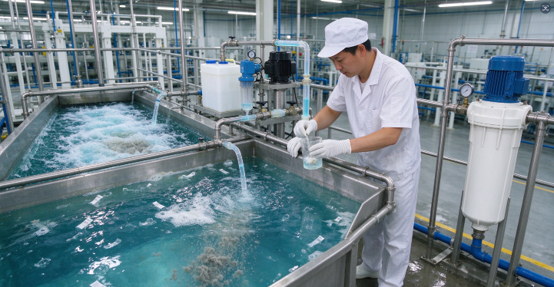
Before beer, beverage and bottled water wastewater enters biochemical tanks, dosing custom PAM delivers notable improvements. Its stretched polymer chains quickly adsorb fine brewer’s grains, yeast suspensions, fruit pulp particles, colloidal contaminants and tiny bottle debris. The chemical binds scattered particles into dense flocs, which separate rapidly via sedimentation or air flotation. This step removes most non-soluble pollutants, lowers inlet COD and suspended solid loads, and relieves pressure on aeration units. Biochemical bacteria operate more steadily, and effluent indicators resist shocks from production changes. This pre-flocculation provides strong buffering especially when bottle washing wastewater surges suddenly.
3. Separate Brewer’s Grains and Yeast Residue to Cut Loss of Organic Solids
Wastewater from breweries and beverage plants contains reusable organic solids. Direct discharge wastes valuable resources and raises treatment costs. Custom PAM accelerates flocculation and sedimentation of brewer’s grains, yeast sludge, fruit pulp and fine fibers. These materials separate faster from wastewater. Recovered grains and yeast sludge can serve as feedstock, organic fertilizer raw material or feed for anaerobic digestion based on on-site processes, boosting resource recovery. Compared with simple filtration, flocculation runs faster and suffers less from water quality variation. It greatly reduces organic solids escaping with effluent.
4. Graded Treatment for Bottle Washing Water Reduces Pollutant Shocks
Bottled drink plants generate massive bottle washing wastewater. This stream carries high alkalinity, label glue, bottle fragments and detergent residues. Mixing it directly with combined wastewater easily shocks biochemical microbes. After adding custom PAM, colloidal contaminants, label glue and fine suspended solids flocculate rapidly. The process cuts turbidity and the load from alkaline washing streams, minimizing disruption to downstream biological systems. Partially treated bottle washing water can recycle in selected processes. This reuse lowers freshwater intake and reduces water consumption and sewage charges.
5. Advanced Sludge Dewatering Cuts Hazardous Waste Disposal Fees
Wastewater treatment at beer and beverage plants produces excess sludge with high organic content, strong viscosity and high moisture. Standard dewatering equipment struggles to dry this sludge, and hauling plus disposal take a big chunk of operational spending. Condition sludge with cationic PAM before feeding it into plate-and-frame, belt or screw filter presses. The additive releases interstitial and bound water inside sludge. The resulting cake is firm, drip-free and much smaller in volume. Sludge volume for disposal and transport expenses drop accordingly. Breweries and bottled water facilities with high sludge output see clear long-term cost savings.
6. Broad Compatibility to Fit Diverse Production Conditions
This custom PAM works across many production lines: breweries, beverage plants, bottled water factories, juice plants and dairy drink manufacturers. It handles saccharification wastewater, fermentation effluent, filling rinse water, bottle washing streams and CIP cleaning wastewater. The product performs well under high suspended solids, heavy colloids and elevated organic loads. Operators adjust dosage flexibly based on incoming turbidity, flow rate and sludge traits. Plants do not need to replace existing sedimentation tanks, air flotation units or filter presses. Teams only add dosing equipment or connect to existing chemical feed pipelines for fast on-site deployment.
7. Low Investment, Fast Returns for Compliant Cost Reduction
Environmental rules grow stricter for food and beverage manufacturers. Beer and bottled beverage sites must keep effluent compliant while controlling operational and treatment costs. Custom PAM requires modest investment yet delivers fast results. It stabilizes wastewater treatment and lowers violation risks. It also recovers lost organic solids and reclaims usable materials. What’s more, it deepens sludge dewatering and trims disposal bills. One chemical solves multiple tasks: wastewater pre-treatment, solid separation, bottle washing treatment and sludge dewatering. It delivers outstanding long-term value and serves as a practical environmental solution for food and beverage manufacturers.