
1. Hard-to-Treat Printing & Dyeing Wastewater: Compliance Pressures & High Treatment Costs
Textile printing and dyeing operators face a common headache. Wastewater from desizing, scouring, dyeing and printing carries large volumes of size agents, fiber debris, dye colloids and chemical additives. It features strong color, complex composition and poor settleability. Conventional sedimentation leaves high turbidity and stubborn color. It easily triggers discharge violations and shocks downstream biochemical systems. Worse still, printing sludge and biochemical sludge hold high moisture and often count as hazardous waste. Disposal fees add up rapidly year over year. Custom PAM for textile printing & dyeing targets this wastewater. It supports full-process treatment: front-end flocculation and turbidity removal, color reduction, and deep sludge dewatering. It helps plants meet discharge limits and cut real operational costs.
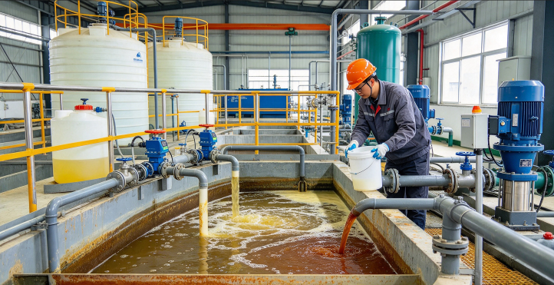
2. Front-End Flocculation Pretreatment to Lighten Burden on Biochemical Systems
Before wastewater enters biochemical tanks, dose custom PAM together with coagulants to boost performance significantly. Its extended polymer chains quickly trap size impurities, fiber fragments and colloidal particles. These particles cluster into dense, large flocs and settle fast. This step removes most insoluble pollutants directly. It cuts inlet turbidity and organic loading substantially. Biochemical bacteria then run more steadily, and outlet indicators resist fluctuations in production flow. It also lowers aeration energy consumption and chemical dosage for advanced treatment later. The process works as a buffer for the whole treatment line, even handling peak seasonal water surges reliably.
3. Synergistic Decolorization & Turbidity Control for Consistent Discharge
Color removal remains a major bottleneck for printing and dyeing wastewater. Reactive, acid, disperse and other dyes form complex mixtures, and single chemicals rarely remove color fully. Combined with decolorants and coagulants, this custom PAM strengthens flocculation and sedimentation. It quickly separates dye-laden flocs to slash wastewater color. Meanwhile, it cuts suspended solids and partial COD in the effluent. Compared with traditional processes, treated water looks clearer with lower color, and all key indexes consistently meet emission standards. When plants switch dye batches or face high seasonal flow, operators can adjust dosing rates rapidly and reduce the risk of non-compliance.
4. Deep Sludge Dewatering to Cut Hazardous Waste Disposal Expenses
Sludge from printing and dyeing treatment (printing sludge and biochemical sludge) usually carries high viscosity and moisture, plus residual dyes and additives. Much of this sludge falls under hazardous waste, with expensive per-ton disposal charges that burden many mills. Condition sludge with cationic PAM, then run it through filter presses or screw presses. The polymer releases interstitial and bound water inside sludge for deep moisture reduction. The resulting cake stays firm and drip-free, and its volume shrinks by over half. Less sludge goes out for disposal. In the long run, savings on hazardous waste treatment far outweigh spending on the PAM product.
5. Broad Compatibility for Full Process Workflows
This custom PAM fits all wastewater streams across textile printing and dyeing lines. It works well for high-solids wastewater from desizing and scouring, heavily colored dyeing effluent, size-rich printing wastewater and washing wastewater. It tolerates a wide pH range and diverse dye systems, and causes no adverse reactions with other water treatment chemicals. It connects directly to existing sedimentation tanks, air flotation units and filter equipment. No extra production line renovation is needed. Small and mid-sized weaving and dyeing mills can deploy it quickly.
6. Simple Operation & Low Dosage for Low Daily Maintenance
Many plant managers worry specialty chemicals bring complex workflows and high costs, yet this PAM has a low technical barrier. Simply dissolve it in room-temperature water with stirring, then pump the solution into treatment points at a fixed rate. Adjust dosage flexibly based on incoming color, turbidity and water volume. Ordinary site staff can master operation after brief training, with no need to hire dedicated technical personnel. Besides, it consumes very little product: only a few grams to more than ten grams treat one ton of wastewater. Daily running costs stay affordable even for small and medium dyeing factories.
Tighter environmental regulations now govern the textile printing and dyeing sector. Facilities must maintain compliant discharge while restraining pollution control spending. Custom PAM for textile printing & dyeing improves wastewater treatment efficiency, stabilizes decolorization and turbidity removal, and lowers violation risks. It also dewaters sludge deeply and drastically cuts hazardous waste costs. One product covers two core needs: wastewater treatment and sludge disposal. It delivers fast results with modest investment, making it a cost-effective pick for dyeing mills pursuing compliance and cost reduction.