
1. High Slime Loss & Water Consumption: Three Core Pain Points
Coal washing plants often struggle with three costly headaches: fine slime runoff, excessive freshwater use, and poorly dewatered tailings. Tiny coal particles escape with washing water, which means lost clean coal. Turbid wash water cannot be reused, driving up bills for freshwater intake and wastewater discharge. Watery tailing slime also carries high hauling fees and takes up storage space when sent for disposal.
Special polyacrylamide for coal washing targets these bottlenecks across the whole washing workflow. It helps reclaim usable coal, cut water expenses and lower overall operation costs.
2. Fast Flocculation of Flotation Tailings: Retain More Clean Coal for Extra Gains
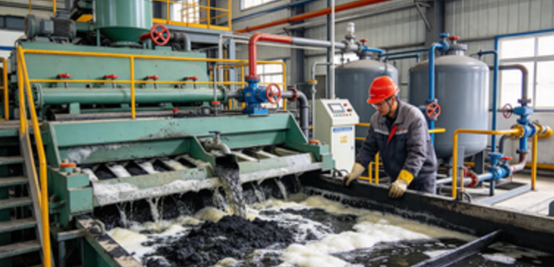
Flotation tailings hold massive fine coal slime. These ultra-fine particles settle very slowly under natural conditions and easily flow out with overflow. Once dosed with coal-washing PAM, stretched polymer chains grab scattered fine slime particles and bind them into dense, fast-settling flocs.
Settled slime can be recycled into clean coal or middlings, lifting coal recovery rates and boosting output. This benefit stands out strongly for plants processing low-rank coal or high-fine-content coal. The reagent essentially recaptures resources that would otherwise go to waste.
3. Clarified Wash Water for Reuse: Less Water Intake & Lower Discharge Fees
Coal washing consumes large volumes of water. Without water recycling, freshwater charges and effluent fees create a heavy financial burden, especially in water-scarce regions. After treatment with PAM, the upper layer of wastewater turns clear with very low suspended solids and returns directly to the washing circuit.
Closed water circulation sharply cuts freshwater withdrawal and effluent discharge. Plants save money on water and discharge charges while staying compliant with emission standards. This setup prevents water shortages during peak production and removes the risk of fines for excessive discharge, supporting stable operation.
4. Advanced Dewatering of Tailings: Reduce Volume and Simplify Disposal
Raw tailing slime and gangue slurry carry high moisture and occupy huge volume. Direct haulage for landfill brings high transport costs and leakage risks on transit roads. Once conditioned with cationic PAM, slime feeds into plate-and-frame or belt filter presses for deep dewatering.
Filter cakes come out firm and drip-free, with volume reduced by more than half. Drier cakes cut freight costs greatly. Depending on calorific value, dried slime can also be sold, co-fired or made into building materials. This turns waste streams into extra revenue and further cuts disposal spending.
5. Wide Compatibility Across Processes: Stable Performance Even With Variable Water Quality
This tailored PAM delivers flexible performance. It works for jig washing, dense-medium separation and flotation lines, and suits power coal, coking coal and anthracite washing alike. It handles coal slurry with varying concentrations and particle sizes, and dosing adjusts easily based on incoming flow and solids load.
No overhaul of existing pipes or equipment is required. It connects seamlessly with current dosing systems, settling tanks and filter presses. Both large and small coal preparation plants can deploy it quickly without halting production.
6. Simple Operation & Low Dosage: Better Long-term Returns
Many operators worry about complex handling or high chemical costs, yet this reagent is user-friendly. Workers only need to dissolve it in room-temperature water at a set ratio, stir evenly and feed it via metering pumps. On-site staff can master the process quickly with minimal training.
Besides, it runs on tiny dosage: only several to a dozen grams treat one ton of coal slurry. Compared with revenue from recovered coal and savings on water and haulage, the input delivers attractive returns. It proves economical for big washing complexes and small preparation stations over long-term use.
Now coal operators face stricter environmental rules. Plants must raise resource recovery while reining in water use and discharge costs. This coal-washing PAM addresses three core demands at once: slime recovery, water recycling and tailings dewatering. It lifts production yield, reduces expenditure, keeps emission compliance and cuts discharge — a practical solution for coal washing plants pursuing quality and profit growth.