
1.Fast Flocculation & Settling of Fines – Tangible Sand Recovery & Higher Yield
Sand and aggregate businesses profit from the gap between output and running costs. Most plant managers track finished sand output closely, yet overlook three hidden losses in washing lines: fine sand lost in wastewater, high freshwater intake charges, and costly sludge disposal. Custom PAM for manufactured sand and washing lines fixes these leaks. It supports fine sand recovery, closed water circulation and deep sludge dewatering to cut waste, lift profits and keep operations compliant.
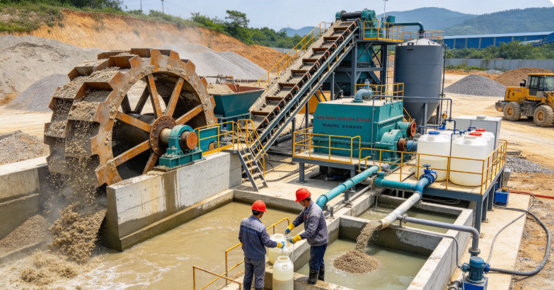
Wash water carries massive fine sand and stone powder particles. These tiny grains weigh little and settle slowly on their own. They often flow out with overflow water. The daily loss may look small, yet it adds up to substantial yield loss over time. This issue gets worse for feeds with high fine sand content. Once you dose the dedicated PAM, its stretched polymer chains grab fine grains and stone powder quickly. The particles clump into dense flocs and settle far faster. The settled fines go straight into finished sand piles, lifting total output and bringing steady extra gains.
2. Clear Recycled Wash Water – Lower Water Intake & Discharge Fees
Sand washing consumes large volumes of water. Many sites face pricey freshwater and heavy discharge levies. Production can also stall in water-short regions or dry seasons. After treatment with PAM, the upper water layer holds very low suspended solids and looks crystal clear. You can pump this clarified water back to washing tanks directly, building a closed circulation system.
This setup slashes freshwater withdrawal and wastewater discharge at the same time. It cuts both water bills and effluent charges. Plants avoid water shortages during peak production and skip fines for murky, non-compliant discharge. Operations run far more reliably. Water-scarce areas or sites with high water tariffs see the biggest savings from water reuse.
3. Fast Dewatering of Tail Sludge – Sharply Reduced Disposal Expenses
Sand washing generates tail sludge and stone powder slurry. This material holds high moisture and takes up huge volume. Hauling wet sludge to landfills wastes transport capacity and burns through freight budgets. Wet sludge also leaks easily during transit and triggers environmental violations. Cationic PAM conditions sludge by altering particle surface properties. It releases trapped free water and greatly speeds up dewatering.
Pair this PAM with filter presses or belt filter presses. The pressed sludge cakes stay firm and drip-free, with volume cut by more than half. Fewer hauling trips follow, which brings down transport and tipping fees greatly. Dry sludge can also serve for on-site backfill or brick making for construction under proper conditions. Waste turns into usable material and drives disposal costs even lower.
4. Wide Compatibility – Fit Existing Lines Without Retrofits
This custom PAM works across diverse raw materials. It suits manufactured aggregate, river pebble washing, granite sand production, limestone aggregate cleaning, stone powder processing and recycled aggregate from construction waste. It handles wash water with varying mud loads and solids concentrations reliably. Operators only tweak dosing rates based on inlet turbidity to keep stable performance.
Plants do not need to rebuild pipelines or upgrade existing equipment. It connects seamlessly with original settling tanks and filter presses. Small, medium and large sand yards can roll it out fast without halting ongoing production.
5. Low Dosage & Simple Operation – Ideal for Sand Plants of All Sizes
Many site owners worry that specialty chemicals bring complex workflows and high running costs. This product has a low learning curve. Workers mix it with room-temperature water at the set ratio, then feed the solution via chemical metering pumps to target points. Adjust doses flexibly according to water flow and water quality. General on-site staff master the process after brief training, with no dedicated technical expert required.
Besides easy handling, the PAM runs at low dosage. Only a few to a dozen grams treat one tonne of wash water. When balanced against revenue from recovered fines plus savings on water and sludge disposal, it delivers strong returns. Large aggregate bases and small standalone washing plants both benefit from long-term use.
Tighter environmental rules now cover the whole sand sector. Factories must lift output, control spending and stay within pollution limits at the same time. Dedicated PAM for manufactured sand washing covers three core demands with one product: fine sand recovery, water recycling and tail sludge dewatering. It raises yield, lowers overhead and stabilizes compliance. For sand and aggregate operators, it is a cost-effective tool to boost performance.