
1. Fiber Loss Wastewater: Tough Treatment, Dual Pressure
Chemical fiber and viscose plants commonly face this pain point. Wastewater from pulp preparation, spinning and washing carries massive fine fibers and pulp residues. Valuable raw materials get lost. Meanwhile, the wastewater has complex composition and high suspended solids. It brings tough treatment challenges and high sludge disposal costs. Polyacrylamide (PAM) for chemical fiber and viscose fiber serves as an efficient additive tailored for this scenario. It covers fiber recovery, wastewater treatment and sludge dewatering across the whole process. It helps factories boost recovery rates, lower costs and sustain discharge compliance. Many plants previously used screen filters for fiber recovery. This method delivers low efficiency and frequent filter replacement. It also leaves incomplete recovery. Plenty of fine fibers flow out with wastewater, wasting feedstock and burdening downstream treatment.
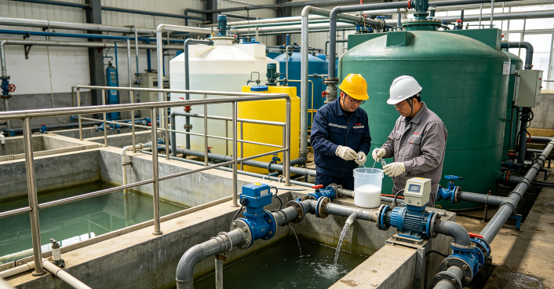
2. Flocculate & Recover Pulp to Cut Raw Material Loss
When you dose dedicated PAM at the front end of pulp wastewater and spinning wash water, fiber recovery rises sharply. Its stretched polymer chains quickly capture tiny fiber and pulp particles in the water. These scattered materials clump into dense, large flocs and settle rapidly at the tank bottom. Recovered pulp only needs simple dewatering before re-entering production. This directly cuts raw material loss and raises material utilization. Compared with traditional screen filtration, flocculation avoids frequent filter replacement and clogging. It handles larger volumes, achieves fuller recovery and eases daily operation.
3. Lighten Load via Pre-Treatment for Stable Discharge Compliance
Wastewater from chemical fiber and viscose production sees frequent pH swings and high chemical additive content. Direct feeding into biological systems easily shocks microbial communities and causes fluctuating COD and suspended solids in effluent. With PAM flocculation in pre-treatment, you quickly remove suspended fibers, colloids and insoluble contaminants. This greatly reduces organic load entering bioreactors. As a result, downstream biological systems run steadily, and microbes resist water quality shocks better. Effluent indicators stay within limits more reliably. In addition, it cuts chemical consumption and aeration energy for advanced treatment, lowering overall operational costs.
4. Deep Sludge Dewatering to Slash Disposal Expenses
Wastewater treatment generates residual sludge with complex composition and high moisture content. Hauling wet sludge brings heavy hassle and high disposal fees. Cationic PAM conditions sludge before dewatering with plate-and-frame or belt filter presses. It deeply reduces sludge moisture. Filter cakes turn firm and non-dripping after pressing, shrinking sludge volume by over half. This delivers a sharp drop in sludge hauling and disposal costs. Furthermore, dry filter cakes can be reused as resources, such as co-incineration or building material production, to further reduce treatment expenditure.
5. Wide Process Compatibility & Strong Condition Adaptability
This specialized PAM boasts great versatility. It works for viscose fiber, polyester, acrylic, polyamide and other synthetic fiber production. It creates stable flocculation for pulp preparation wastewater, spinning waste liquor, alkali reduction wastewater and washing effluent. It tolerates wide pH ranges and high-salt environments, and stays inert to various production additives. You can feed it into existing sedimentation tanks, recovery units and filter press systems. No extra production line retrofits are required for fast on-site implementation.
6. Simple Operation & Low Dosage for Enterprises of All Sizes
Some operators worry specialty chemicals require complex handling and high spending. In fact, this additive has almost no technical barriers. Simply dissolve it in room-temperature water with stirring, then meter the solution via dosing pumps into target sections. Adjust dosage flexibly based on incoming water quality and flow. Regular site workers can master the process after a brief demonstration; no dedicated technical staff is necessary. Besides, the chemical needs minimal dosage — only several to a dozen grams per ton of wastewater. It keeps daily operational costs low and fits chemical fiber manufacturers of all scales.