News

News

polyacrylamide-for-drilling

Polyacrylamide (PAM) for Drilling

I. Polyacrylamide (PAM) for Drilling Polyacrylamide (PAM) is a water-soluble polymer with both stability and multifunctionality. It is normally a

What is the difference between polyacrylamide powder and liquid?

The core difference between polyacrylamide dry powder and liquid lies in their form and dissolution method: dry powder requires dissolution before use, while liquid can be added directly; secondly, there is the issue of storage stability—dry powder is easy to store, while liquid requires protection against degradation.

Form and Usage (Most Crucial)
Dry Powder: Solid granules or powder, must be dissolved in water according to the specified ratio before use (usually takes more than 30 minutes) to form an aqueous solution before addition.

Liquid: Pre-dissolved aqueous solution or emulsion, no dissolution step required, can be directly diluted or added, saving operation time.

Storage and Transportation
Dry Powder: Low water content (usually <10%), small footprint, low transportation costs, can be stored for 1-2 years in a sealed, dry environment.

Liquid: High water content, large packaging volume, high transportation costs, and susceptible to degradation due to temperature; shelf life is typically only 3-6 months.

Cost and Applicable Scenarios
Dry Powder: Relatively low unit price, suitable for scenarios with large usage volumes and available dissolution equipment and time (such as large-scale wastewater treatment plants and oilfield extraction). Liquid: Higher unit price, but eliminates the dissolution process, suitable for small-volume applications and scenarios where convenience is important (such as small-scale emergency wastewater treatment and laboratory use).

The selection of polyacrylamide requires comprehensive consideration of the application scenario, water quality characteristics, and operating conditions. The following is a detailed selection guide:

Selection Process

Step 1: Determine the Ion Type

Anionic: Suitable for alkaline wastewater containing inorganic suspended solids, such as mining and coal washing wastewater.

Cationic: For high-concentration organic wastewater and sludge dewatering, such as food processing and papermaking wastewater.

Nonionic: Suitable for acidic or high-salt wastewater, with strong resistance to electrolyte interference.

Step 2: Determine Water Quality Characteristics

pH Value: Choose cationic for acidic wastewater, anionic for alkaline wastewater, and nonionic for neutral wastewater.

Impurity Charge: Use cationic for negatively charged dye particles, and anionic for positively charged metal ions.

Step 3: Determine the Form: Powder or Liquid

Suitable Scenarios for Dry Powder:

Paper mills, mining beneficiation plants, and other places with large usage volumes.

Companies that are cost-sensitive and have corresponding dissolving equipment.

Users with limited storage conditions but requiring a long shelf life.

Suitable scenarios for liquid selection:

Small-scale wastewater treatment plants or laboratories.

On-site emergency wastewater treatment.

Situations requiring high ease of operation.

Step 4: Small-scale test

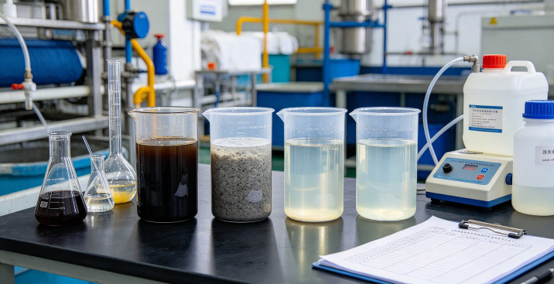
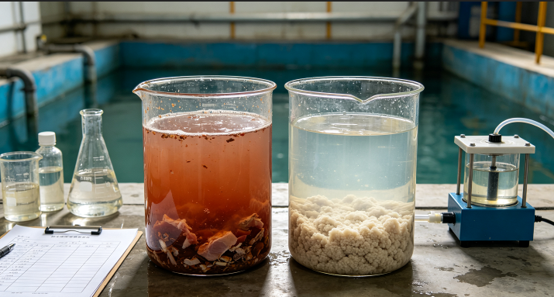
Take 100ml of water sample, add 0.5ml of different types of 0.1% concentration PAM solutions, and observe the floc formation rate and density within 3 minutes. Select the model with the best effect.

Important reminder: Avoid selecting solely based on molecular weight or ionic strength; the optimal model must be determined experimentally.

Scroll to Top