
1. Handle Fluctuating Inflow: Boost Pre-Treatment & Reduce Load
Anyone working in municipal wastewater plant operations knows the biggest headache. Rainy seasons or holiday surges from commercial areas can send flow and water quality swinging sharply. Primary sedimentation tanks struggle to keep up, which disturbs downstream biological systems and causes unstable effluent metrics. Our PAM for municipal sewage works well for these variable conditions. Dosed ahead of primary clarifiers with coagulants, it quickly gathers suspended solids, colloids and fine debris into large flocs for faster settling. This enhanced pre-treatment removes most insoluble pollutants and greatly lowers organic loads entering bioreactors, giving microbes extra buffer capacity. Even with sudden doubled flow or concentration spikes, your system stays robust. You avoid rushed parameter tweaks and enjoy much smoother daily operation.
2. Simplify Effluent Upgrade: Reliable Clarification via Advanced Flocculation
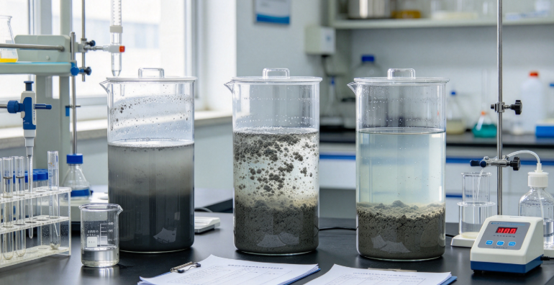
Tighter discharge limits now impose strict caps on total phosphorus, suspended solids and COD. Many older plants cannot meet new standards with existing processes, while full-scale retrofits cost massive time and capital. Add specialized PAM in advanced treatment stages alongside phosphorus removers and coagulants. The blend flocculates residual colloids, fine suspended solids and bound phosphorus for sedimentation. No major process overhauls or large new equipment are required. Water clarity improves visibly, and key indicators including TP and SS stay under control. This helps wastewater plants hit upgraded discharge targets steadily. When incoming water quality shifts, minor dosage adjustments offer fast responses. You gain consistent compliant discharge without constant stress over online monitoring data.
3. Cut Sludge Expenses: Condition & Dewater to Shrink Volume
Sludge disposal accounts for a large share of wastewater plant operating costs. Waste sludge holds high moisture content, forms sticky slurry and resists dewatering. Disposal and transport fees apply by weight, creating heavy annual spending. Cationic PAM conditions waste sludge effectively. It pulls scattered sludge particles together and releases trapped water. Paired with belt filter presses, screw presses or filter plate presses, it produces firmer, non-dripping sludge cakes with markedly lower moisture. Sludge volume drops significantly. Less sludge directly cuts transport and disposal charges. Larger treatment facilities see bigger savings, adding up to substantial cost reduction over time.
4. Fit Full Process Chains: Easy Setup & Flexible Tuning
This dedicated PAM delivers broad compatibility. It suits conventional activated sludge, A/O, oxidation ditch, MBR, CAST and other modern processes. It performs reliably for sites handling pure domestic sewage, mixed residential-commercial wastewater, or streams with light industrial contamination. Operation stays simple too. Dissolve the powder in room-temperature clean water, then feed continuously via dosing pumps. Adjust dosage freely based on inflow volume, pollutant concentration and sludge volume index. Ordinary site operators master the process after brief training. You do not need external technical teams or pipeline retrofits; it connects to existing infrastructure right away.
5. Small Investment, Strong Returns: Optimize Long-Term Operation
Many operators view chemical dosing as an extra expense. Yet full-cost accounting proves it saves money instead. Specialized PAM requires minimal dosage — only a few grams per ton of treated water. This modest investment creates benefits across multiple stages. Upfront, it buffers shock loads and prevents system breakdowns. Mid-stream, it maintains compliant effluent and avoids fines for limit breaches. Downstream, it reduces sludge volumes and slashes high disposal bills. Stable operation is the biggest cost saver for municipal wastewater plants, paired with tangible cuts to sludge handling expenses. The product brings excellent overall value. It serves as a practical low-cost, fast-acting process supplement, especially for plants undergoing discharge standard upgrades or facing frequent influent fluctuations.